
Young People
Great strides have been made in recent years in making available opportunities for children to be educated through the medium of Gaelic.
Gaelic medium education (GME) is one of the main ways of achieving or maintaining fluency in Gaelic. This is especially true of children from a non-Gaelic speaking background. Gaelic medium education is open to everyone, those who speak Gaelic and those who do not
Research by Edinburgh University (PDF link) has shown many benefits of GME, including :
- children educated through Gaelic are on par with, or outperform, children educated in one language.
- bilinguals can access different literatures and more ways of thinking and acting.
- Gaelic bilinguals have a better understanding of their place in wider Scottish culture identity.
- being bilingual offers many career opportunities.
- children exposed to different languages at an early age tend to be more focussed than monolinguals at’multitasking’.
- they are generally better readers, and find it easier to learn other languages.
In our local area, Gaelic education is available in the following schools:
Inverclyde Council have Gaelic medium provision at Whinhill Primary School, Drumfrochar Road, Greenock, PA15 4EQ & Inverclyde Academy, Cumberland Road, Greenock, PA16 0FB
West Primary School, Newton Street, Paisley, PA1 2RL
Thornliebank Primary School, 10 Main Street, Thornliebank, G46 7SH
GME is also available in Glasgow at nursery, primary and secondary levels.
Check out the web-sites of Bòrd na Gàidhlig and Comann nam Pàrant for more information.
College and University
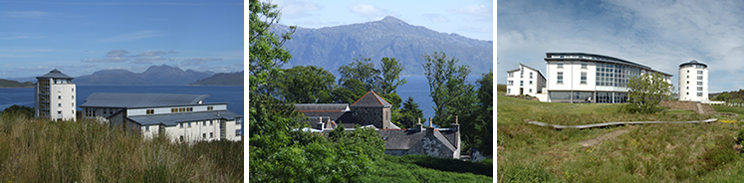
For school-leavers and mature students, there are many opportunities to begin learning Gaelic or to improve existing skills. Many universities in Scotland offer degree courses incorporating Gaelic or Celtic Studies, and Sabhal Mòr Ostaig, the Gaelic college in Skye (which is part of the University of the Highlands and Islands) offers a wide range of short-term, vocational and degree courses.
Glasgow Kelvin College offers a Gaelic course.
Adult Learning
There are classes run in the local area at a variety of levels, some organised by the local authorities, check out the local Gaelic classes page.
Similar classes are available throughout the country – see the LearnGaelic web-site to find out what is available in the location you require.
 ClannGàidhlig